

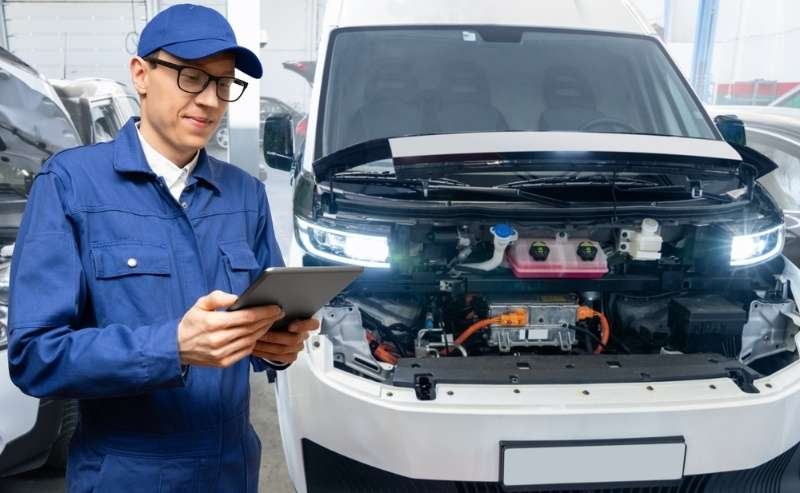
The electric car maintenance schedule explains how often an electric vehicle needs servicing and what parts need attention. It is simpler than traditional cars because there is no engine to maintain. That alone changes the way servicing works.
This blog will cover everything about EV maintenance, including service timing and routine checks. It will help you in your car to perform better in the long-term.
Must Read: Seasonal Car Maintenance Tips for Summer and Winter Care
Electric vehicles do not follow the same strict servicing pattern as fuel-based cars. Instead, maintenance depends more on usage and driving conditions. That is where EV service intervals become useful, as they provide a general direction rather than a fixed rule.
In most cases, a vehicle is checked once every year or after consistent usage over time. However, daily driving conditions matter more than any schedule written on paper. A vehicle used in crowded roads with frequent stops will need attention sooner than one used for smooth highway driving.
Driving style also changes things quietly. Sudden acceleration, repeated braking, and carrying extra weight can increase wear on tires and braking components. These changes are not always visible immediately, but they build up slowly.
Weather conditions also play their part. High heat affects battery cooling systems, while damp environments may lead to minor brake issues if left unchecked. These are not serious problems at first, but ignoring them can create inconvenience later.
A simple EV maintenance list keeps things simple, organized, and focused only on what needs to be done, eliminating any extra steps.
Tires are also a critical component, especially since EVs have a heavier mass due to the presence of the battery pack, thus accelerating tire degradation. Regular tire rotation, together with proper tire inflation, is essential to ensure balance and traction.
On the other hand, brakes have unique characteristics, especially since regenerative braking reduces pad degradation, thus extending their lifespan. However, reduced pad use can cause minor surface issues, thus necessitating periodic checks.
Fluids, though limited, play a critical role, such as brake fluid and battery coolant, which need to be checked every now and then to ensure seamless performance. While these do not need to be replaced often, neglecting them is not advisable.
The battery system, though not needing any form of periodic maintenance, needs careful use, especially considering various factors such as charging, exposure, and usage, all of which affect its lifespan.
Minor checks done at critical periods result in major benefits without adding any extra burden.
A practical EV upkeep guide focuses on simple habits rather than complex routines. These habits are easy to follow and help maintain performance without stress.
By keeping the battery in the right condition and avoiding extremes, it will remain stable over time. You do not need to plug it in fully each day for regular use.
When it is hot, park in the shade. And when it is cold, avoid exposing the battery to it. These are small, day-to-day decisions, but they can really make a big difference in the end.
Accelerate slowly, decelerate slowly. This will reduce the wear on tires, among other things, and create a more pleasant driving experience.
These improve efficiency and fix small problems, but you do not have to do anything. Skipping them will not cause problems, but it is good to get them.
Top Pick: Know When to Change Your Engine Oil for a Healthy Car Life
Many people expect a strict servicing regime, but this is not the case with an electric vehicle. Instead, it is flexible and based on how you use the vehicle.
In most cases, an annual check is sufficient for most vehicles. This will include tires, brakes, and fluids.
Unlike traditional vehicles, there is no need to worry about oil or engine servicing, which is time-consuming.
However, you cannot ignore servicing altogether. Small problems, such as uneven tire wear or delayed brake checks, can lead to bigger problems if ignored.
The basic concept is simple. You need to be attentive at certain times rather than following a set routine. This is what is best for an electric vehicle.
The cost of maintaining an electric vehicle in good condition is not quite as mysterious as one might think. Most people think it’s going to be dirt cheap or ridiculously expensive, but the truth is, it’s probably somewhere in between, depending on how you drive your car and how well you take care of it.
For one, there are fewer parts to go wrong, so there’s less risk of expensive repairs or services.
On the flip side, there are parts, such as tires, that could potentially wear out faster because of the vehicle’s weight.
What’s most important to note, though, is that there’s a certain level of predictability to maintaining an electric vehicle. There’s less risk of surprise repairs, which makes the process much less intimidating.
Understanding this concept is key to understanding how much easier it is to take care of your vehicle. It’s not about eliminating the process, but making it easier to manage.
The following things play an essential role in the EV maintenance checklist:
The tires take the brunt of the car, especially with the extra weight of the batteries and the torque that comes with it. Regular tire rotation, proper tire alignment, and tire pressure all play a part in maintaining a smooth ride and ensuring the tires do not wear out with time.
Even with regenerative braking, the conventional brakes will still be relied upon in case of emergencies. Regular checks ensure that the brakes remain in good condition and free from any potential issues that may develop in the course of time, considering their low usage.
The battery does not need regular servicing, but it is dependent on how it is used. The batteries should not be subjected to extreme charging, and their usage should be balanced.
The electric car maintenance schedule is simple, but it still requires attention at the right time. Regular checks, careful driving, and basic habits keep the vehicle reliable. It is less about frequent servicing and more about smart maintenance that fits real-world use.
Most electric vehicles need inspection once a year, but usage and driving conditions can change that timeline slightly.
No, electric vehicles do not use engine oil, so oil changes are not required at any point.
Tires, brakes, fluids, and battery condition are the main areas that need periodic attention.
This content was created by AI